Everything changed for Jim Vallance the evening of Sunday, February 9, 1964. “I heard ‘Ladies and gentlemen, The Beatles,’ then they played ‘All My Loving,’ and I think my jaw hit the floor,” remembers the Canadian songwriter and musician, watching The Beatles’ first appearance on The Ed Sullivan Show.
“I was born in 1952, but my life began in 1964.”
The next day, The Beatles were the topic of conversation in the schoolyard. “At recess, it was ‘Did you see The Beatles last night?’” says Vallance from his apartment in New York City. “It’s all we talked about.” Before Beatlemania hit, music was the furthest thing from Vallance’s mind since he was a kid consumed by baseball, hockey, and Batman comics.
“From that moment, I just thought ‘Whatever that is, that’s what I want to do,’” shares Vallance. “I didn’t know about writing, or producing, or any of that; I just saw these four guys making magic. I think it changed a lot of people at that moment. It made everyone pick up an electric guitar.”
When he was 13, Vallance’s parents finally “caved” and bought him a guitar, while his grandmother gifted him a drum kit, and he learned both in tandem. The Beatles even inspired one of Vallance’s first attempts at songwriting at 14 or 15, “Marjorie,” a song he calls a “Sgt. Pepper, Beatles-esque kind of thing.” “It wasn’t written about anyone in particular, but more riffing off of Paul McCartney’s feminine titles like “Eleanor Rigby,” “Michelle,” and “Martha, My Dear.”
“It wasn’t fully formed,” he says. “It was one of those invent a name and write some lyrics around it.”
Vallance later joined the band Prism during the late 1970s, the brainchild of Bruce Fairbairn, who would later produce Bon Jovi, Van Halen, and AC/DC. Both previously played in the jazz-rock band Sunshyne, and Vallance was enlisted on drums and ended up writing the majority of the band’s 1977 self-titled debut under the pseudonym Rodney Higgs.
After touring with the band for a year and opening for Heart and Foreigner, Vallance parted ways with the band to concentrate on songwriting and continued co-writing songs on the band’s albums throughout the 70s.
“I didn’t like the touring part,” admits Vallance. “I decided I was better suited and happier just staying home and sleeping in my own bed, writing songs.”
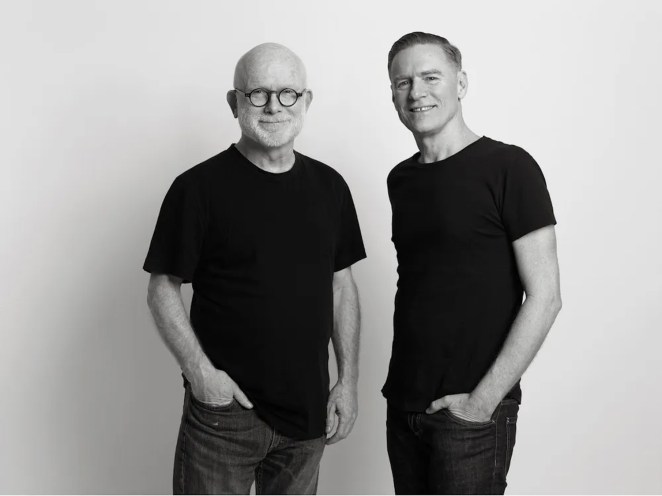
Continuing to play as a drummer in the Vancouver scene, another turning point in Vallance’s life came when he met Bryan Adams at the Long and McQuade music shop in Vancouver in 1978. At the time, Adams had just left his band Sweeney Todd, and Vallance was also out of work.
“We were both kind of kicking around with no plan and no idea where we were headed,” recalls Vallance, “so we got together two days later and wrote a song the first day, the second day, and the third day.”
Their connection was an “immediate affinity,” Vallance says. “We were on the same page,” he adds. “We both loved [Led] Zeppelin and The [Rolling] Stones, and started getting together every day to write songs. Then we started shopping around to record companies, but no one was interested.” It took a year before the two, who also wrote and arranged tracks on Prism’s 1979 album Armageddon, received some interest from A & M Records.
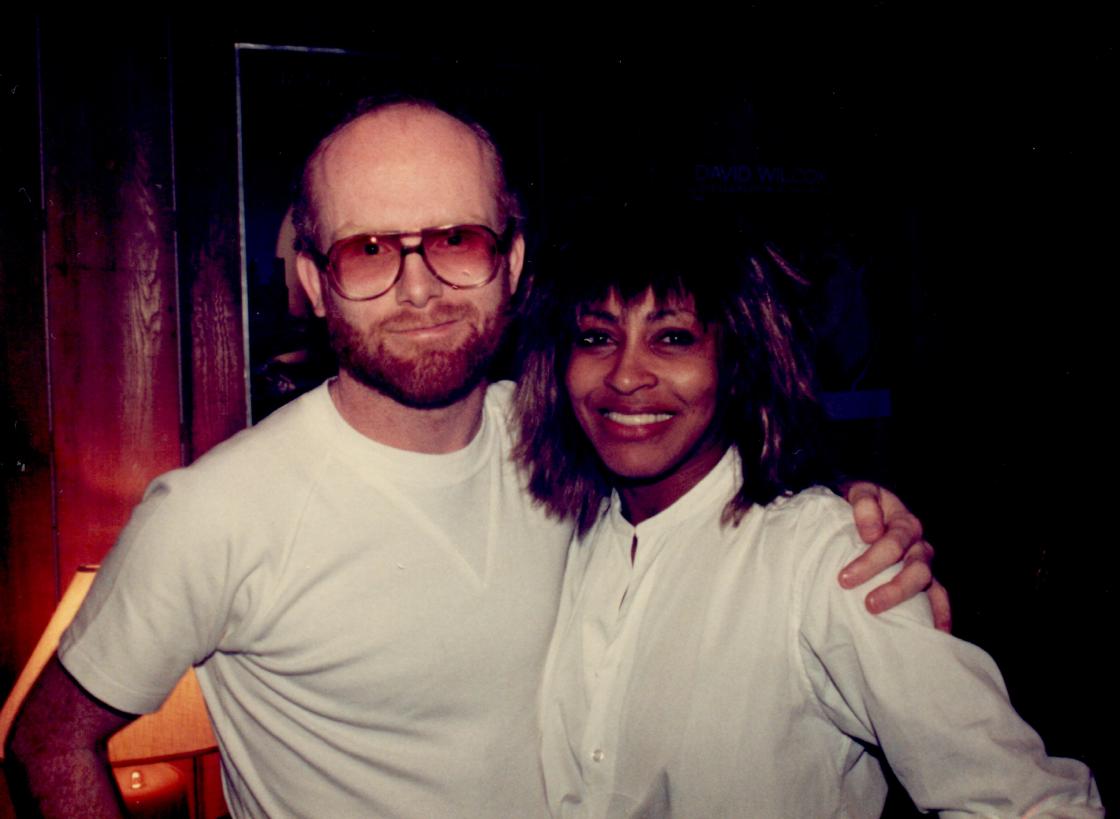
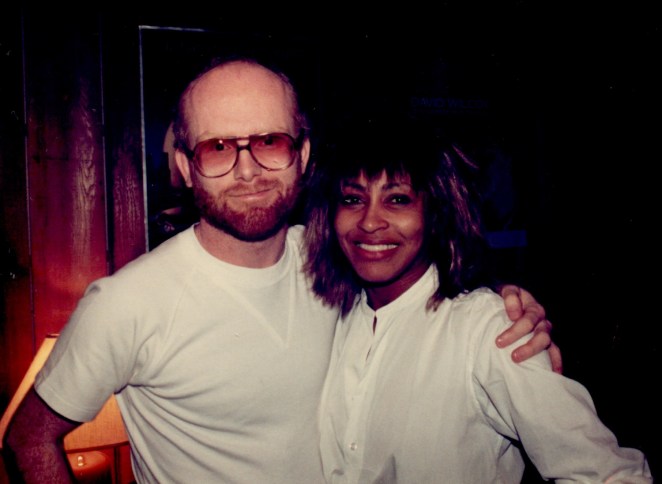
A bona fide songwriting duo by the late 1970s, the two went on to write songs for Kiss, Joe Cocker, 38 Special, Rod Stewart, Bonnie Raitt, and Carly Simon, among others. They also penned “Rebel” and “Let Me Down Easy” for Under A Raging Moon, the 1985 Roger Daltrey tribute album for the Who’s late drummer Keith Moon, along with two more songs for Tina Turner including her duet with Adams, “It’s Only Love,” and “Back Where You Started” for Turner’s 1986 album Break Every Rule, earning a Grammy for Best Rock Vocal Performance, Female.
Both songwriters had their biggest breakthrough in 1983 with Adams’ third album Cuts Like A Knife, and its title track, which made it onto the U.S. chart, before propelling higher a year later with Reckless and hits “Run To You,” “Summer of ’69,” and their first No. 1, “Heaven.”
“It took us five or six years from the day we met until we could have claimed anything close to success,” says Vallance.
What worked between Vallance and Adams was that there was never any ego at the songwriting table. “You’re working with someone that trusts you, and you can trust them,” says Vallance. “There’s no ego. It’s about: the best idea wins.”
During the mid-1980s through ’90s, Vallance was also a hot commodity on his own as a songwriter, working with everyone from Ozzy Osbourne, Alice Cooper, Rick Springfield, Scorpions, and Joan Jett, among others. Vallance’s hits spanned Glass Tiger’s “Don’t Forget Me (When I’m Gone),” which went to No. 2 on the Billboard Hot 100 in 1986, and Aerosmith’s “Rag Doll” and “Other Side,” along with Heart’s 1995 chart-topper “What About Love,” a song he had written three years earlier for the Canadian band Toronto.
By the late ’80s, Vallance says his union with Adams started to run its course when they realized that they couldn’t write another album better than Reckless. In a last attempt, Vallance says they decided to write fewer “boy-girl” love songs and delve into weightier subjects with “Native Son,” and the injustices facing the Native American population, “Remembrance Day,” a tribute to the soldiers that died during World War I, and “Heat Of The Night,” partly inspired by Orson Welles’ 1949 noir thriller The Third Man and a trip Adams took to Berlin in 1986, years before the wall came down.
“We went down that road, but in doing so, I think we lost our way,” says Vallance. “I don’t think we were being authentic to ourselves and decided, ‘I think we’ve run the course. Let’s take a break.'”
Their pause, following Adams’ 1991 album Waking Up the Neighbors, ran longer than Vallance expected. When they reunited during the 2000s to work on Adams’ 2008 album 11, Vallance says there was a clean slate.
“When we came back together again, it was fresh and renewed,” says Vallance, who has continued working with Adams through his 2022 album So Happy It Hurts. “And we had different experiences over the years and more to bring to the table.”
Vallance also admits that by the mid-1990s, he first started experiencing burnout from writing since it was difficult for him to say “no” to some of the projects coming in. “Everyone I worked with was such a joy and so inspiring that I never did say ‘No,’” he says. “But I did get to a point where I did just in terms of sort of mental, physical, emotional exhaustion from just doing it too much.”
At the time, he was also helping raise his son, Grammy-winning musician Jimmy Vallance, and took off a year to be more present in his life. “I was full-on creative from the age of 16 into my 60s,” says Vallance. “Even when I wasn’t writing, I was thinking about writing. I was always on, which was a blessing and a curse.”
Being consumed by writing is something Vallance likens to hearing voices in his head. “You could be having dinner with friends, and you’re thinking about the song that you’re working on,” he says. “I can’t explain it, nor can I explain why I haven’t been creative for a few years now. The voices have stopped. That constant drip of ideas has ceased.”
He adds, “In some ways, it’s kind of glorious not hearing the voices, and in other ways, I really miss doing it, but it’s not something you can force. I didn’t quit writing. Writing quit me.”
In 2016, Vallance and Adams teamed up again to write the music for the Broadway production of Pretty Woman, and in 2022, both were inducted into the Canadian Songwriters Hall of Fame, alongside Alanis Morissette, David Foster, and Daniel Lavoie.
Though Vallance hasn’t written anything new in years, if the inspiration comes again, he’ll be there to meet it. He’s even been working with Adams on his forthcoming album, reworking some previous songs they had shelved.
Now 73, Vallance is content with the legacy of the songs he’s written, including those that still hit closer to home than expected. Toward the end of the interview, Vallance pulls up a video on his phone of his 2-and-a-half-year-old grandson singing along to “Summer of ’69.” In 2025, his grandson even sat behind the drums during a recent soundcheck with Adams.
“It’s just music all day, every day for him,” laughs Vallance.
“It was good fun, good experiences, wonderful people,” Vallance adds, reflecting on his work. “And I wouldn’t trade it for anything.”
Photo: Courtesy of Jim Vallance
The full story also appears at Americansongwriter.com.

