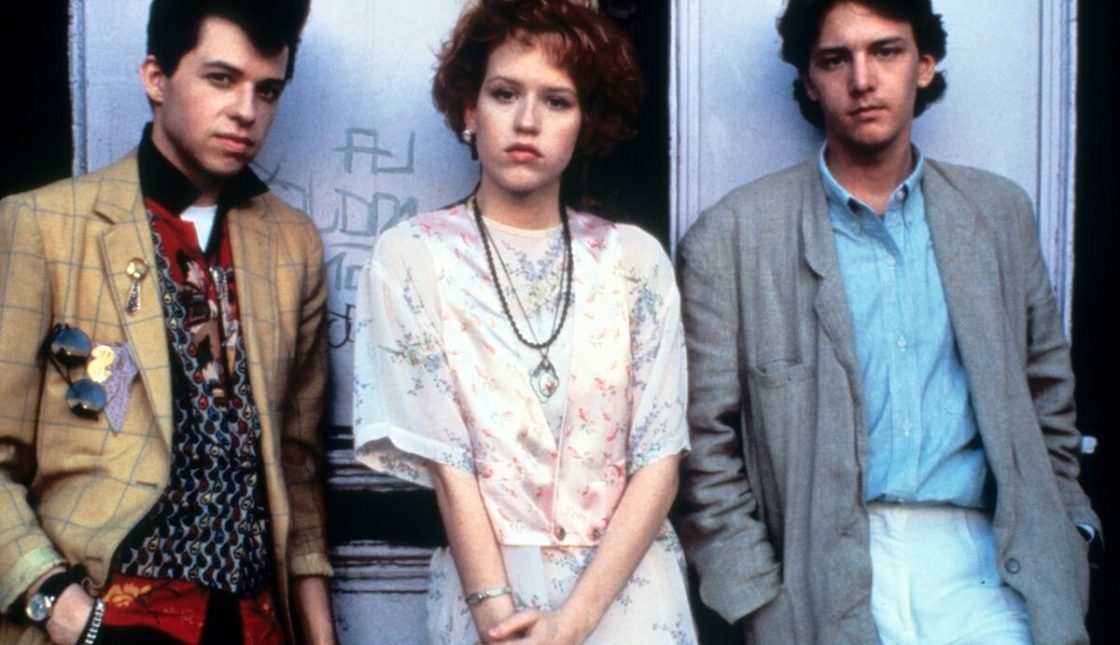
Decades after John Hughes’ iconic film and soundtrack catapulted some then-unknown bands into the ears of American teens, members of New Order, Psychedelic Furs, Orchestral Manoeuvres in the Dark, INXS, and more remember their movie moment
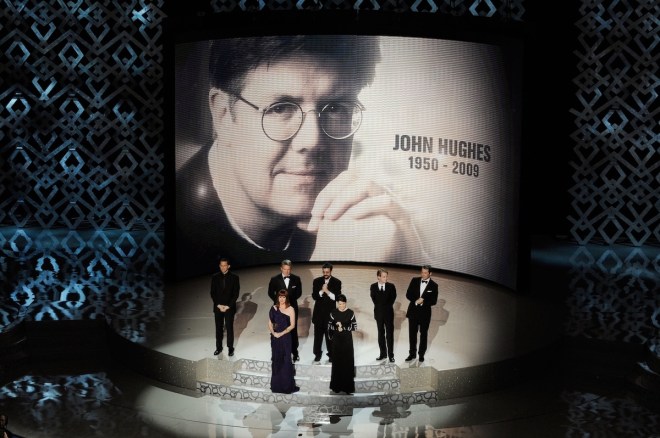
“Chicago is what I am,” John Hughes once said of his hometown, the centerpiece around the late director and screenwriter’s movies and the base of his trifecta of ’80s films—Sixteen Candles, The Breakfast Club, and Ferris Bueller’s Day Off.
It was also in Chicago, at the famed blues club Kingston Mines, when Hughes was persuaded by his then movie muse, Molly Ringwald, to write another film. Ringwald even gave Hughes a title for the 1986 film, Pretty in Pink, delivered by way of a single released years earlier by the Psychedelic Furs on the band’s 1981 album Talk Talk Talk. Though the song didn’t match the more innocent nature of the Howard Deutch-directed teen drama—based in the suburban town of Elgin, Illinois—it became its premise, following the story of Andie (played by Ringwald), who comes from a working-class family and is navigating high school cliques and young love, caught in between the rich boy Blane (Andrew McCarthy), and her oddball friend Duckie (Jon Cryer).
Hughes and Ringwald also shared a love for music and were sharply tapped into British new wave and post-punk. It’s something Hughes had already penetrated on the soundtrack to his 1985 film, Weird Science, with Oingo Boingo, Kim Wilde, and Lords of the New Church. 1985’s The Breakfast Club closes with “(Don’t You) Forget About Me” by Simple Minds, signaling the end of detention for his five high school delinquents.
The latter soundtrack also featured Jesse Johnson, of the Prince-founded funk group the Time, who would reappear on Pretty in Pink with “Get to Know Ya.” Hughes was also a big fan of the Smiths and used the band’s 1984 song, “Please Please Please Let Me Get What I Want” in Pretty in Pink, as Duckie sits alone in his room pining for Andie, and again with the Dream Academy’s cover in Ferris Bueller’s Day Off.
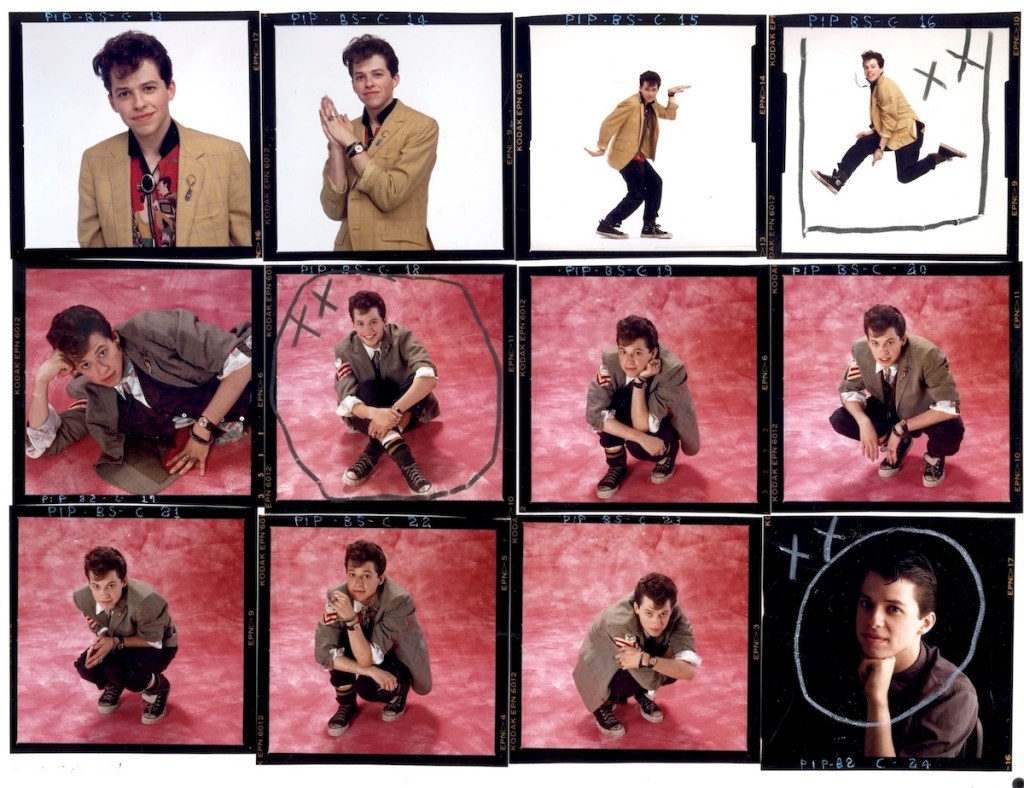
Proof sheet of twelve portraits of actor Jon Cryer in costume as “Duckie Dale” for the film Pretty in Pink in Los Angeles, California in 1986. (Credit: Bonnie Schiffman/Getty Images)
Curated by Hughes along with music supervisor Tarquin Gotch, Pretty in Pink was another gateway soundtrack, delivering some lesser-known artists to American teens, from New Order and Orchestral Manoeuvres in the Dark to the pre-“Lips Like Sugar” Echo & the Bunnymen with “Bring on the Dancing Horses,” and British singer-songwriter Nik Kershaw’s “Wouldn’t It Be Good,” performed in the film by Three Dog Night singer Danny Hutton.
The latter was a track Suzanne Vega says she connected with most, while “Left of Center,” which she co-wrote with producer Steve Addabbo, also made it onto the soundtrack.
“I was writing mostly for the film, but also I wanted a song that I could sing myself, so I put a fair amount of myself into it,” says Vega, who was asked by her label A&M to submit a song for consideration and was given the script.
“Left of Center” was also a song Vega wrote for Ringwald’s Andie, a girl from the wrong side of town—If you want me / You can find me / Left of center / Off of the strip / In the outskirts / In the fringes / In the corner / Out of the grip.”
“I was writing for the film itself, and I had it in my mind that it would go over the credits at the end, but the director had other ideas,” says Vega. “Instead, it comes out of the radio during a scene where they speak over it the whole time, so that wasn’t quite how I imagined it.”
Though named after the Psychedelic Furs song, what became the opus of Pretty in Pink was another song written during a 24-hour rush by Orchestral Manoeuvres in the Dark. Hughes first approached the band to write a song in early 1985 for the closing prom scene at the end, and wanted something like “(Don’t You) Forget About Me,” which was around 120 bpm. OMD submitted “Goddess of Love,” which ended up on the band’s 1986 album The Pacific Age.
When OMD were invited to Paramount Pictures studios, they met Ringwald and Cryer, who were already big fans of the band after hearing them on KROQ, the alternative station in Los Angeles.
“They were so sweet,” remembers OMD’s Andy McCluskey. “We were amazed, because we still hadn’t had much success in America up to that point, and a label in the States that was not interested, and John and Molly were like, ‘We’re such big fans.’”
Just as OMD were about to go on tour with the Thompson Twins, Hughes told them the ending of the movie had changed and that Andie ends up with Blane, not Duckie, and they needed to send a new song.
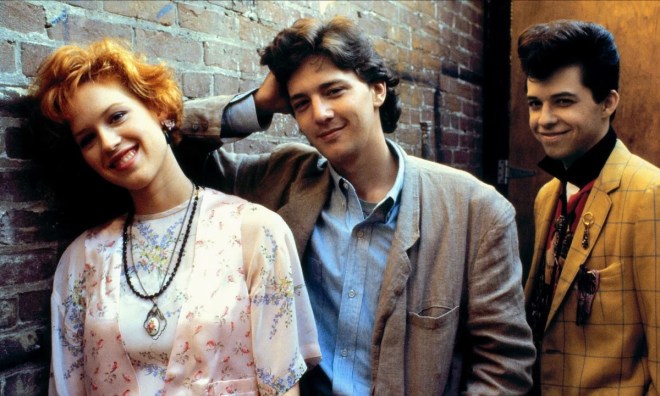
Jet-lagged and waiting for equipment to arrive at Larabee Studios in Los Angeles, Paul Humphreys started playing some chords, then McCluskey sat at the piano to think of some words and came up with “If You Leave,” along with bandmate keyboardist Martin Cooper.
“It was like something out of Tin Pan Alley,” laughs McCluskey. “We never wrote songs like that. We always used to write onto tape or using the synth, but here we were writing on an old-fashioned piano, sketched something out, and started recording.”
The band finished “If You Leave” around 3:00 am and sent a rough mix on cassette to Hughes by late-night motorcycle courier. Their assumption was that the Psychedelic Furs’ more polished rerecording of “Pretty in Pink” would be the lead single since it was the title track, and at the last minute, “If You Leave” was released first.
By 1986, OMD had hit their first Top 40 in the U.S., “So in Love,” and were set to release “Secret,” but pulled it from radio after seeing how successful The Breakfast Club was for Simple Minds, and released “If You Leave” instead.
McCluskey jokes to crowds that “Secret,” which was never officially released, was the “biggest hit we never had in America.”
Originally, “If You Leave” ran more than five minutes long, and the band was asked to cut it for the radio. “We got it down to four minutes, 25 seconds, and we could not cut any more out of it without butchering what we did,” recalls McCluskey. “We just wrote on the tape box ‘four minutes’ and submitted it, and nobody ever checked. They never said anything.”
While watching the film during its premiere at Grauman’s Chinese Theatre in Los Angeles, McCluskley remembers waiting to hear OMD’s placement during the prom scene and realizing that no one was dancing around the 120 bpm, after all. “Not one person was dancing on the beat,” he laughs. “It could have been any tempo. They’re all dancing out of time.”
Regardless of any off-beats, Pretty in Pink was still a pinnacle for OMD at the time. “Having had years of frustration, where we were playing in little clubs with songs that were massive singles everywhere else in the world, but not getting on the radio in America, suddenly, we were driving around Los Angeles, and ‘If You Leave’ was on the radio—on four channels simultaneously.”
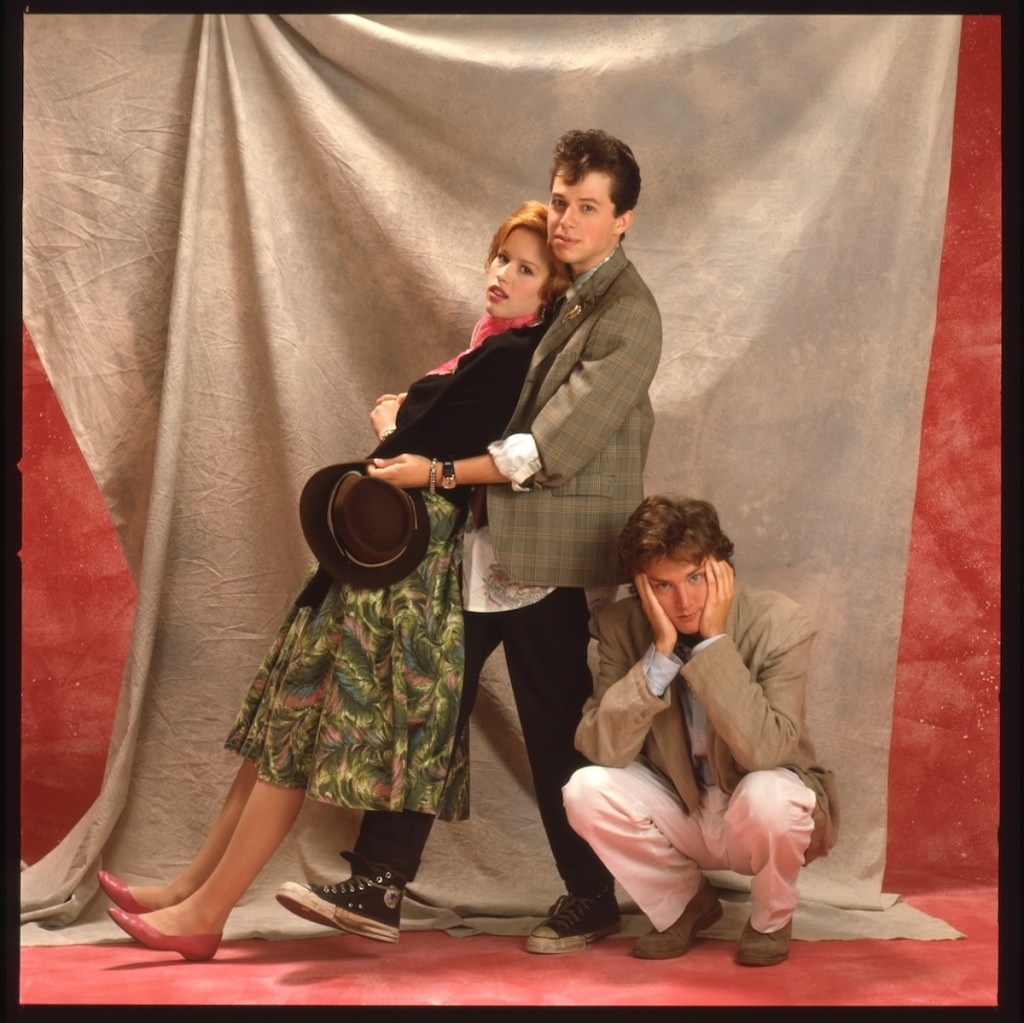
Once released, the Pretty in Pink soundtrack went to No. 5 but was a double-edged sword for some bands. Its success was “good and bad,” for the Psychedelic Furs, says co-founder Tim Butler, who co-wrote “Pretty in Pink” with singer and brother Richard and the rest of the band.
The band already had some history with Hughes since “Love My Way” was featured in his 1983 romantic comedy Valley Girls, starring Nicolas Cage, but when Pretty in Pink came out, some fans thought the Psychedelic Furs had sold out to “Brat Pack” movies, while newer ones latched on.
“We gained a lot of fans, and we lost some, too,” shares Butler. “But now, when we see the audience singing along to ‘Pretty in Pink’ and getting into it, it makes it new for us.”
Still, Butler recognizes how the soundtrack brought more visibility to the Psychedelic Furs and other bands like INXS in America. “It helped every band,” says Butler, “and did a lot of good for their careers.”
In between releasing their breakout album Listen Like Thieves in 1985 and Kick, INXS contributed the funkier “Do Wot You Do,” written by the band’s Andrew Farriss and late singer Michael Hutchence, to the soundtrack.
“It’s like being in a time warp, going back and listening to what people were playing and writing back then,” says Farriss. “Not all artists on Pretty in Pink sound the same. The other thing that’s interesting is the innocence of Pretty in Pink, in the modern sense, where everything is so on the table.”
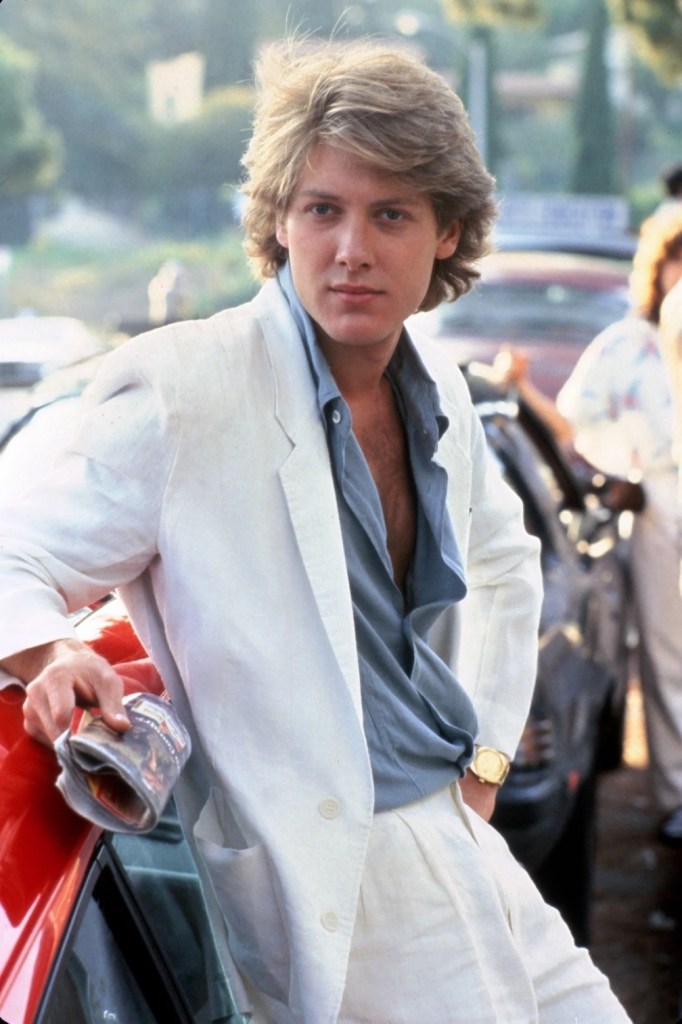
Farriss says it was a period of experimentation for everyone, including INXS, whose longtime producer Chris Thomas also produced “Do Wot You Do” for the band.
“When I listened to the recording techniques that were being used back then, you can hear people experimenting, like New Order and Orchestral Manoeuvres in the Dark,” Farriss adds. “Bands were experimenting with drum machines, and there was the early technology of sampling, and it’s stood the test of time.”
Belouis Some, real name Neville Keighley, whose “Round, Round” made it into the film, says Hughes was “ahead of what was happening in the States” when it came to music and even fashion. Already a fan of Some’s 1985 U.K. hit “Imagination,” Hughes sent him a script and eventually joined Keighley in the studio in London.
Despite its success, Keighley says there was a period when he took a break from playing “Round, Round” live before revisiting it again several years ago. “I love playing it live now,” he says. “I was pissed off by the beginning of the ’90s, but when I came back, I suddenly realized songs that I didn’t like, I really did like.”
When approached by Hughes to write a song, New Order were also going through a transformative period, due to infighting over the band’s shift from rock to electronic. Leaning on the latter for the soundtrack, New Order also fared better than most, with three songs placed in the film. Though cut from the final soundtrack, the band’s instrumentals “Thieves Like Us” and “Elegia” were woven into scenes, while “Shellshock” made it on.
At the premiere of Pretty in Pink, New Order’s Peter Hook remembers waiting for the scene where “Shellshock” was placed. “I was absolutely cock-a-hoop,” says Hook. “And then all of a sudden, later on in the film, ‘Shellshock’ came in and it had only been in the film for eight bars, which I thought was fucking hilarious.”
Still, Hook says he liked the soundtrack and was a fan of Hughes and the other featured artists. “I liked the film a lot, and I loved The Breakfast Club, so to be asked to do it was such a great honor,” he says. “It was a very strong soundtrack, and we were in great company, without a shadow of a doubt.”
With the reissue of the Pretty in Pink soundtrack (March 13) on limited-edition pink vinyl, featuring Otis Redding’s “Try a Little Tenderness” and Talk Back’s “Rudy,” which were also featured in the film, Butler still finds it funny that Pretty in Pink was based on the song about a promiscuous girl who is being laughed at behind her back. “He [Hughes] didn’t do very well with interpreting the song,” Butler jokes. “It’s not as innocent as the film.”
McCluskey says a lot of the lyrics didn’t make sense in the film, but it didn’t matter in the end. “If You Leave” was about “leaving” and “breaking up,” and the band genuinely felt bad for Duckie and were shocked that Andie didn’t end up with him in the end.
“We felt sorry for Duckie, so it was a sort of sad song for him,” adds McCluskey. “It was almost like Duckie was saying they would continue to be friends.”
Duckie and the rest of the characters, he says, were part of the reason why bands like OMD, New Order, Echo & the Bunnymen, and the Smiths were on the soundtrack.
“The kids in the John Hughes movies were outsiders,” says McCluskey. “They weren’t the jocks, and they weren’t the cheerleaders. They were the ones going to the record store listening to English imports, and that’s why most of the songs in John Hughes’ movies during the ’80s were Anglophile. They were British bands, because that’s what the kids in his movies would have been listening to.”
In touch with each artist and scene, Hughes summed it up best in the liner notes of the Pretty in Pink soundtrack.
“The music in Pretty in Pink was not an afterthought,” he wrote. “The tracks on this album and in this film are there because Howie Deutch and I believe in the artists, respect the artists, and are proud to be in league with them.”
The original story appeared on Spinmagazine.com.

